
Quick Answer
In North Carolina, your own uninsured motorist coverage can pay for injuries caused by an unidentified hit and run driver, if there was physical contact, a prompt police report and timely notice.
Do not wait for the driver to turn up. Report the crash fast, give your insurer written notice, and keep the injury claim separate from the car repair. The car is one fight. Your injuries are another.
Key Takeaways
- Hurt by a driver who fled?
- Does North Carolina law make your own insurer pay when the driver is never identified?
- Why do adjusters tell North Carolina drivers that uninsured motorist coverage won't pay for a hit and run?
- What if the hit and run driver ran you off the road but never touched your car?
- What steps and deadlines must you meet to file a hit and run claim in North Carolina?
- Where does a North Carolina hit and run claim go from here?
- What else do people ask about hit and run claims in North Carolina?
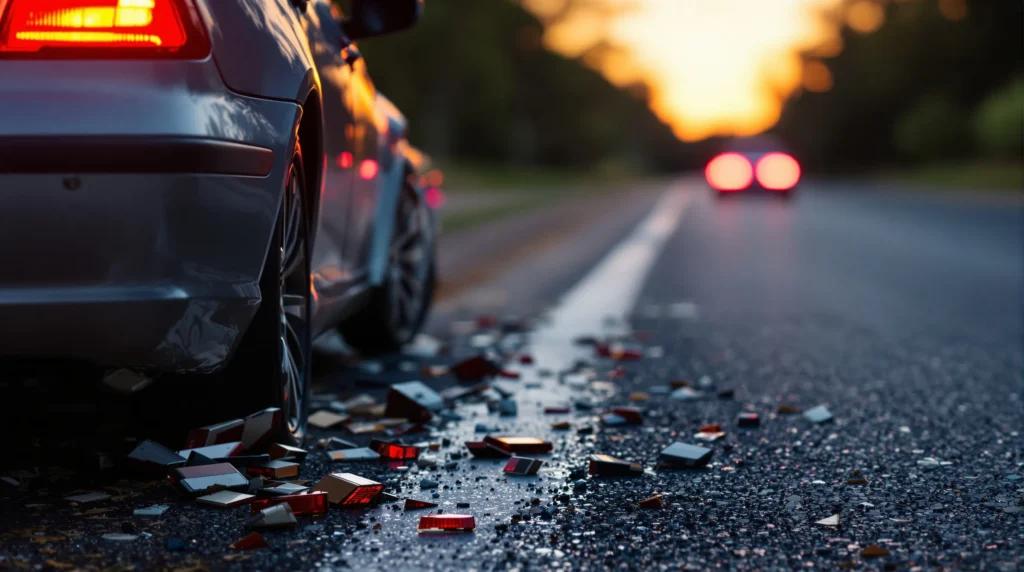

The first call after a hit and run often goes badly. The adjuster says that with no driver there is nothing to claim, or closes the file because no one can tell whether the fleeing driver had insurance. Usually that answer is about the car.
Ask the adjuster one plain question: is that denial about the car, or about my injuries? North Carolina’s uninsured motorist statute reaches bodily injury caused by an unidentified driver, and its conditions fit on an index card: physical contact, a prompt police report, notice to your insurer, and a waiting period before you sue.
The ceiling matters as much as the door. North Carolina’s minimum bodily injury coverage under G.S. 20-279.21 was $30,000 per person for policies issued or renewed before July 1, 2025, and $50,000 per person for policies issued or renewed on or after that date. For two or more people, the floor rose from $60,000 to $100,000. Those are liability floors. Your uninsured motorist limit is its own line on the declarations page, and with no driver to chase, I would read that line before anything else.
Leaving is a crime even when nobody is hurt. G.S. 20-166 requires a driver to stop after a crash that damages only property, too. When someone is hurt, the charge becomes a felony, and the stakes shift to what the statute asks of the person left standing in the road.
A car hits yours and keeps going. The taillights shrink. You are left with a dented door, a sore neck and no name. Most people stop there and assume there is no claim. Before you accept that, ask one question: did the other car touch yours? Then pull your policy and read the uninsured motorist coverage section, word for word.
The law treats the flight itself as a crime. “Hit and run” is the common name for several offenses in G.S. 20-166, a statute where neither word appears. Under the statute, leaving a crash that causes serious bodily injury or death is a Class F felony, and leaving one with lesser injuries is a Class H felony. Willfully leaving a crash that damages only property is a Class 1 misdemeanor. Whether the charge is a felony turns on whether someone was hurt and whether the driver knew or had reason to know it.
The statute also spells out what a driver who stays must do. The driver must give their name, address, driver’s license number and the license plate number of the vehicle, and must render reasonable assistance to anyone injured, including calling for medical help when it is needed or asked for. A driver who speeds away has skipped every one of those steps, which is why the information you gather yourself carries so much weight.
None of that pays a medical bill. A criminal charge needs a defendant. Your insurance claim does not. Uninsured motorist coverage on your own policy pays in place of the other driver’s insurer, up to the dollar amount of coverage you bought. To my mind, that is the piece most people miss. Sometimes the scene leaves enough to find the car. Other times there is almost nothing to go on, and the claim rides on what you did in the first hours after the crash. Our Charlotte hit and run accident lawyers start there.
Questions this article answers
Hurt by a driver who fled?
Your own uninsured motorist coverage may already owe you. A free consultation with a Charlotte injury attorney at Brown Moore & Associates checks contact, reporting and notice before deadlines pass.
That coverage pays in place of the missing driver, up to the limit you bought. Leaving the scene of an injury crash is a felony here. Waiting on a claim is a choice people regret years later.
Schedule your free consultation
Does North Carolina law make your own insurer pay when the driver is never identified?
Yes. North Carolina requires uninsured motorist coverage on every auto policy, and that coverage reaches crashes where the driver who hit you is never identified.
Before you take an adjuster’s word on the phone, do four things:
- Pull the declarations page of your policy and find the uninsured motorist line.
- Write down the bodily injury limit listed there. That number is your ceiling.
- Check whether you carry collision coverage. Collision is what fixes the car.
- Ask the adjuster, in writing, which coverage they are evaluating: your injuries or your vehicle.
The NCDMV states the rule without ornament. G.S. 20-279.21 requires uninsured and underinsured motorist coverage on all policies, “even if they exceed the minimum requirements.” Nobody buys their way out of it. If you drive a North Carolina registered car, you already own it.
The statute does more than require the coverage. Subsection (b)(3) lays out how a claim works when the other driver has no name. Your own insurer stands in for the driver who fled. Under (b)(3)a, the insurer can be served as an unnamed party. Lawyers call that a John Doe action. The unidentified driver is the defendant on paper. Your carrier is the one who answers.
Enjuris, a legal information site, put the logic plainly in its 2022 guide. When the driver is never identified, the case sits between you and your own insurer, and compensation falls under uninsured motorist coverage “because there’s no question of fault.” That last phrase is too tidy for my taste. Ask the adjuster which facts about the crash they still dispute.
The common assumption runs the other way: no driver, no claim. Some adjusters repeat it. What they usually mean is narrower. Uninsured motorist coverage for injuries is one coverage. Uninsured motorist property damage is another. For the car, an unknown driver usually means collision coverage and its deductible. The research section below walks through why adjusters so often say otherwise.
The split matters. The injury claim survives a missing driver. Keep the medical bills in a separate file from the repair estimate. If you hear a no, ask for it in writing, with the policy section it rests on.
Our Charlotte car accident attorneys at Brown Moore & Associates bring more than four decades of collective personal injury practice in North Carolina to questions like this one. Sometimes the driver surfaces later. Until then, the claim runs through your own policy.
The statute’s operative word is collision.
Why do adjusters tell North Carolina drivers that uninsured motorist coverage won’t pay for a hit and run?
Adjusters often tell North Carolina drivers that uninsured motorist coverage does not work for a hit and run. The statute shows why that answer is half right.
The half that is right concerns the car. G.S. 20-279.21 requires uninsured motorist coverage for injuries caused by “uninsured motor vehicles and hit-and-run motor vehicles.” Its property damage requirement covers only “owners or operators of uninsured motor vehicles.” Hit and run vehicles are left out. Insurers add a practical worry: without a known driver, anyone could blame a fleeing car to avoid paying a deductible.
So two coverages share a name. Uninsured motorist bodily injury coverage pays for injuries. Uninsured motorist property damage pays for the car, and the law requires it only for uninsured drivers, not for hit and run vehicles.
North Carolina’s statute is written around the first one. The unidentified driver provision, G.S. 20-279.21(b)(3)b, describes an insured who “claims that he has sustained bodily injury as the result of collision between motor vehicles” and cannot identify the other driver. That person “may institute an action directly against the insurer.”
| What was harmed | What the sources say responds | What decides it |
|---|---|---|
| Your car, driver never identified | Collision coverage, subject to your deductible | Whether you bought collision. A liability-only policy usually leaves the car without coverage. |
| Your body, and the other car struck yours | An uninsured motorist bodily injury claim directly against your own insurer, under the statute | Proof of a collision between vehicles, a police report, and notice to the insurer |
| Your body, but the other car never touched you | Usually a denial under the physical contact rule | The hard case, covered in the next section |
The injury route only opens if the paper trail exists. Enjuris, a legal information site, says that even with no description of the car, the police report “will indicate that it was a hit-and-run, which will be essential to your insurance claim.” The statute also puts a duty on the insurer that few drivers hear about.
15 days
After an insurer receives notice of the accident, G.S. 20-279.21(b)(3)b gives it 15 days to mail forms asking for further information. If the forms are not furnished within 15 days, the statute says the insured “is deemed to have complied” with that requirement.
Once the claim is open, your insurer is still a party with its own interests. Enjuris warns that recovery stops at “the limit of the uninsured motorist portion of your policy,” and that an insurer’s objective is “to pay out the least amount in settlements.” Fault matters too. In an uninsured motorist injury claim, your insurer takes the place of the missing driver and can raise contributory negligence, and Enjuris notes that a driver who flees “doesn’t necessarily” bear all the fault.
So the adjuster’s sentence and the statute describe different losses. For the car, an unknown driver usually means collision coverage and a deductible. For injuries, the legislature wrote a route straight to your own insurer, open to those with proof of contact and timely paperwork, and contested by an insurer that may still argue fault.
- When an adjuster says uninsured motorist coverage does not apply, ask in writing whether that answer covers property damage, bodily injury, or both.
- Check your declarations page for collision coverage and its deductible. That is usually what repairs the car when the driver is unknown.
- Photograph paint transfer, scrapes and impact points before any repair. An injury claim against an unidentified driver depends on showing a collision between vehicles.
- Ask the officer whether the report records the crash as a hit and run, and note the date your insurer received your notice to track the 15-day forms window.
- Look up your uninsured motorist bodily injury limit, and expect questions about fault before you give your insurer a statement.
How we checked this
We read the current text of North Carolina’s uninsured motorist statute, G.S. 20-279.21, on the General Assembly’s website, and a legal information guide from Enjuris. We have no data on how often North Carolina adjusters tell callers that uninsured motorist coverage does not apply. No figures in this section come from our firm. We represent injured people in these claims, so we have a stake in the answer. Still unknown: how often North Carolina insurers pay injury claims after an unidentified driver hits someone, and how often that driver is later found.
- North Carolina General Assembly, G.S. 20-279.21 statute text, retrieved October 21, 2026.
- Enjuris, guide to North Carolina hit-and-run accidents, February 2022.
What if the hit and run driver ran you off the road but never touched your car?
Then the claim gets hard. North Carolina courts read the unidentified driver provision to require physical contact between vehicles, and a near miss usually falls outside it.
The statute’s first condition for an unidentified driver claim is a collision between motor vehicles. That language sits in G.S. 20-279.21(b)(3)b. North Carolina courts have taken the word collision at face value. In Hendricks v. USF&G, 5 N.C. App. 181 (1969), the Court of Appeals asked whether the absence of physical contact with an unknown “hit-and-run” motorist barred recovery against the insurer, and answered: “Our answer is yes.” In Kaska v. Progressive, an unpublished 2017 decision, the court applied the same line to gravel thrown from an unidentified dump truck, noting the statute “has traditionally been construed to require … that physical contact be made between the plaintiff’s vehicle and that of the unidentified motorist.”
No contact, no uninsured motorist claim against an unknown driver. That is the rule as the courts apply it.
Picture the case that keeps injured people up at night. A pickup drifts across the center line on a two lane road. You jerk the wheel. Your car leaves the pavement and folds against a tree. The pickup’s taillights shrink and disappear. Its paint never touched your fender. Under the contact rule, that is a hard case, and I won’t dress it up as anything else. Witnesses, a dash camera and a detailed police report still matter there, but they push against a rule the courts have held to for decades.
The reason for the rule is not hard to find. Insurers worry about staged claims. A driver who loses control alone could say a phantom car forced them off and fled. The rule also turns away honest people. Both things are true.
When contact does happen, it leaves marks. Paint transfer on a quarter panel. A cracked mirror housing. A shard of grille plastic in the road. Each one proves a collision occurred.
Enjuris makes a separate point worth holding onto: a driver who flees doesn’t necessarily bear all the fault for the crash. Flight is not proof of fault. Contact is proof of a collision. Keep the two apart when you talk to an adjuster.
If you were run off the road without contact, do the same things anyway. Report the crash, give your insurer written notice, and keep every photo and witness name. Then have a lawyer read the exact words of your policy against the facts. The contact rule is strict, but whether it fits your crash is a question worth asking before you give up on a claim.
For you, this means one thing above all. Photograph the damage before a body shop touches it, and keep any broken parts. Fleeing drivers are sometimes found, and the claim then shifts to their insurer.
Contact gets you through the door. The statute’s clock starts the moment you step out of the car.
What steps and deadlines must you meet to file a hit and run claim in North Carolina?
Report the crash within 24 hours or as soon as practicable, give your insurer written notice within a reasonable time, and wait 60 days after that notice before suing.
Contact gets a claim in the door. The procedural conditions are where good claims die. Here they are in order, from G.S. 20-279.21(b)(3) and the general filing statute.
| Condition | What it means | How to prove it |
|---|---|---|
| Collision between motor vehicles | The unidentified vehicle physically struck the vehicle you were in | Photos of damage and paint transfer, broken parts, police report, witness names |
| Report within 24 hours or as soon thereafter as practicable | Police hear about the crash from you, fast | Report number, 911 call record, medical records explaining any delay |
| Notice to your insurer within a reasonable time | Your own carrier learns about the injury, not only the car | Dated letter or email, claim number, written acknowledgment |
| No suit until 60 days after first notice | The insurer gets a window to evaluate before litigation | A copy of the first notice showing its date |
| Insurer served as an unnamed party | The suit names John Doe; your insurer is served and defends | Summons and proof of service |
| File suit within three years (G.S. 1-52) | The general personal injury deadline, with exceptions | The crash date on the police report |
The police report is the hinge. Insurers often will not process a hit and run claim until a report number is attached, and the statute makes a prompt report a condition of the injury claim. Paper keeps a claim alive. Silence kills it.
The 60 day rule is less of a trap than it sounds. The statute says that failing to give the insurer 60 days’ notice before suing “shall not be grounds for dismissal of the action.” It gives the insurer more time to answer instead. The deadline that can end a claim is the three year filing limit, not the waiting period.
My advice on notice is blunt. Put it in writing, even if you already called. A phone call leaves no date anyone has to honor. The statute asks that the notice describe your injury and how serious it is, and give the time, date and place it happened.
Get any piece of the plate you can, and write it down before memory blurs. A partial plate, or one with a wrong character, is still a lead. Investigators can run variations against the make and color.
Camera footage disappears fast. Ask nearby businesses the same day; our post on whether surveillance videos can help pursue hit and run drivers explains why speed matters.
If you were on the clock when you were hit, a second clock runs. The North Carolina Industrial Commission states that written notice of a workplace accident must reach the employer no later than 30 days after it, and a workers’ compensation claim carries a two-year limit.
Even with every box checked, one question hangs over the file. Will anyone ever find the driver?
Where does a North Carolina hit and run claim go from here?
Next comes the paper: the police report, your written notice, and the insurer’s reply. If your insurer has not answered your written notice, write again and keep a copy of both letters.
The driver who fled may never get a name. On the insurance side, that changes less than people fear. In 2023, an estimated 11.8% of North Carolina motorists were uninsured, and the uninsured motorist coverage on your own policy was written for that gap and for the car that never stopped. The statute tells you what it takes to open it.
One more case gets its own rules. If a driver hit you while you were walking and then fled, the questions change, and our pedestrian accident page covers those claims.
Keep a simple file. One folder for the car: photos, the repair estimate, the collision claim. One folder for your body: medical records, bills, missed work and the uninsured motorist claim number. Date every letter you send and every letter you receive. The statute’s conditions turn on dates, and the file is how you prove you met them.
As I see it, the hard part is the first week. The report. The written notice. The photos and the names. Miss one, and the adjuster has a reason to close the file.
Summarize This Article With AI
Open this article in your preferred AI engine for an instant summary.
What else do people ask about hit and run claims in North Carolina?
Most questions come down to proof, timing and which coverage pays. Here are the ones that come up after a driver flees and leaves you holding the damage.
Move fast. Evidence fades by the hour.
• Call 911 and ask for a police report.
• Write down the plate, or whatever part of it you saw.
• Photograph the cars, the debris and the road.
• Ask nearby businesses about cameras right away, before the footage is gone.
• Get names and numbers from witnesses.
• Get medical treatment.
• Notify your insurer in writing.
Yes. Under G.S. 20-279.21(b)(3)a, your insurer can be served as an unnamed party. That is the John Doe suit: the case runs against the unidentified driver, and your own carrier answers for it.
Probably not. With no driver to identify, the car usually goes to collision coverage, and North Carolina’s uninsured motorist property damage requirement does not reach hit and run vehicles. Without collision, the repair is likely yours unless the driver is found. Read your declarations page before you need it.
That matters here. North Carolina still follows contributory negligence, and under G.S. 1-139 the side raising it must prove it. The carrier standing in for the missing driver can raise it, so a few seconds of your own driving can become the fight.
Yes. G.S. 20-166 requires a driver who knows or should know a crash caused injury to stop, remain at the scene, give information and render aid. Leaving a crash that causes serious bodily injury or death is a Class F felony, and leaving one with other injuries is a Class H felony.
Then the claim can move to that driver’s liability insurance. If that driver had no insurance, your own uninsured motorist coverage still applies, and if the driver’s limits are too low for your injuries, underinsured motorist coverage may add to them. Tell your insurer in writing as soon as the driver is identified, and keep every claim number.
The statute lets you report to a police officer, a peace officer, another judicial officer or the Commissioner of Motor Vehicles. The deadline is 24 hours “or as soon thereafter as may be practicable,” so a hospital stay does not automatically sink the claim. Keep the medical records that show why the report came later.
Under G.S. 20-279.21(b)(3), the insurer must mail its forms within 15 days of receiving notice of the accident. If the forms are not furnished within 15 days, you are treated as having complied with the requirement to furnish information. Note the date your notice arrived.
In most cases three years, under the general filing statute, G.S. 1-52, with exceptions. The report and the notice to your insurer run on a much shorter clock. I would treat those as the real deadline.
Start at the Brown Moore & Associates contact page. The firm is a Charlotte personal injury and workers’ compensation practice representing people hurt in motor vehicle accidents across North Carolina and South Carolina. Bring the police report and every letter from the insurer.

Courtney E. Mann is a devoted personal injury lawyer who focuses on helping and advocating for individuals and families harmed by others.

