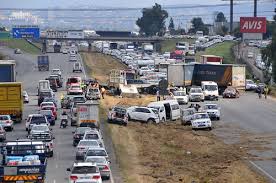
Car accidents can take many forms, including rear-end, head-on, T-bone, multi-car, rollover, and single-car crashes. Each type presents different questions about fault, evidence, and injuries. A rear-end crash often turns on following distance, a T-bone collision may involve a failure to yield at an intersection, and a rollover or single-car crash can involve a road owner or vehicle manufacturer as well as the driver.
Brown Moore & Associates, PLLC handles claims arising from each of these collision types. Our attorneys have decades of combined experience with North Carolina personal injury cases, and clients work directly with an attorney throughout the case. People searching for a Charlotte car accident lawyer often want to understand where their own crash fits before deciding what to do next, and the sections below describe how each type of collision typically works.
You can reach out to us by filling this form or calling us at 704-335-1500.
Head-On Collisions
Key Takeaway: Head-on collisions often cause catastrophic trauma, and a high percentage of them end in fatalities. The driver who left their lane is most often the one held responsible, although a government agency, vehicle manufacturer, or other third party can share responsibility in some cases.
In a head-on collision, the fronts of two vehicles strike each other. The combined speed of both vehicles at impact, along with the additional impact of your organs slamming into your skeleton, are why these crashes so often result in severe or fatal injuries. Brain injuries, spinal cord damage, broken bones, and internal bleeding are among the harms we see, and injured people frequently face a long recovery that includes surgery, rehabilitation, and time away from work.
Who Is at Fault in a Head-On Collision?
Fault in a head-on collision depends on how one vehicle came to be in the other’s lane, and a court decides it on the facts of each crash. Most head-on crashes begin with a driver in the wrong place. A motorist may drift across the center line, pass on a curve, or enter a road traveling in the wrong direction, often because of fatigue, impairment, or distraction. In some cases the roadway itself contributes, such as when guardrails are missing or traffic signals malfunction.
We investigate each of those possibilities when we evaluate head-on collisions, because the responsible party is not always the other driver.
Rear-End Collisions
Key Takeaway: Rear-end crashes carry a high risk of debilitating soft-tissue injuries like whiplash, and in head and brain injury. The trailing driver is usually found at fault, although the lead driver can share responsibility in some situations.
A rear-end collision is a crash in which one vehicle strikes the back of another, most often because the trailing driver is following too closely, is distracted, or cannot stop in time. Whiplash, back and neck injuries, and concussions are common in rear-end accidents, and symptoms sometimes do not appear until days after the crash. Medical documentation from the start of treatment helps establish the connection between the collision and the injury.
Who Is at Fault in a Rear-End Collision?
The trailing driver is usually found at fault under N.C.G.S. 20-152(a), which prohibits following more closely than is reasonable and prudent, although a court decides fault on the facts of each crash. An insurer may still look for a reason to shift part of that responsibility to the injured driver, and in North Carolina that can have serious consequences for the claim.
Can the Lead Driver Share Fault?
A lead driver can share fault by stopping without warning, changing lanes without signaling, or driving with brake lights that do not work.
A court weighs those facts against the trailing driver’s following distance and speed, so evidence from both vehicles matters.
T-Bone (Angle) Collisions
Key Takeaway: T-bone accidents commonly occur at intersections when the front of one vehicle strikes the side of another. These crashes can cause serious injuries, particularly to occupants seated near the point of impact, and fault often depends on which driver had the right of way.
A T-bone collision is a type of angle crash in which the front of one vehicle strikes the side of another, forming a T-shaped impact. These accidents frequently happen when a driver runs a red light or stop sign, fails to yield while turning left, or enters an intersection without checking for approaching traffic. Because the side of a vehicle offers less space to absorb an impact than the front or rear, occupants may suffer head injuries, broken ribs, pelvic fractures, or other serious trauma.
Who Is at Fault in a T-Bone Collision?
Determining fault often comes down to traffic signals, right-of-way, and each driver’s actions immediately before the crash. When both drivers claim they had the green light or the right of way, surveillance footage, witness accounts, vehicle damage, and traffic-signal records may help establish what happened.
These details are particularly important because of our contributory negligence rule.

Multi-Car Accidents
Key Takeaway: Repeated impacts, entrapment, and fire can make injuries in a multi-car crash more complicated. Responsibility may rest with one driver, several drivers, or a combination of them.
A multi-car accident is a crash involving three or more vehicles, often a chain reaction in which the first impact pushes vehicles into one another. These crashes can involve three vehicles or dozens, and each driver involved often points to someone else. Injuries can also compound, since a person may be struck more than once, trapped inside a vehicle, or hurt in a fire.
How Is Fault Determined in a Multi-Car Accident?
Fault in a multi-car accident is determined by establishing the sequence of impacts and which driver’s conduct started the chain. Our first task in multi-car accidents is to build that timeline from police reports, traffic and dash camera video, vehicle data, and witness accounts.
Because North Carolina follows a pure contributory negligence rule, each driver’s insurer has a reason to argue that the injured person contributed to the crash, so the evidence needs to be gathered early.
Rollover Accidents
Key Takeaway: Rollovers often cause spinal cord, head, and neck injuries. Responsibility can rest with a driver, a government, or the maker of the vehicle or its parts.
A rollover is a crash in which a vehicle tips onto its side or roof. Rollovers accounted for 28% of passenger vehicle occupant deaths in 2024, or 6,250 of 22,713, according to the 2024 report by the Insurance Institute for Highway Safety (IIHS). Rollovers can follow a collision with another vehicle, a sharp overcorrection, or a slide onto a soft shoulder or curb, and vehicles with a high center of gravity are more likely to roll. Occupants may suffer neck, back, and spinal cord injuries, head trauma, and broken bones.
Can a Manufacturer Be Responsible for a Rollover?
That depends on whether a defect caused the rollover or worsened the injuries. A tire failure, a suspension problem, or a defect in the roof or seat belts may mean that a manufacturer shares responsibility, and poorly maintained roads can contribute as well. These rollover accidents often require inspection of both the vehicle and the roadway, so preserving them is important.
Rollovers accounted for 28% of passenger vehicle occupant deaths in 2024.
Single-Car Crashes
Key Takeaway: Concussions, fractures, and back injuries are common in single-car crashes. Responsibility may also fall on another motorist, a road owner, or a manufacturer.
A single-car crash is a collision involving one vehicle, such as one that runs off the road, strikes a tree or guardrail, spins out, or swerves to avoid debris or an animal. These single-car crashes can still cause serious injuries, including concussions, fractures, and back injuries.
A single-car crash is not always the driver’s fault. A court decides responsibility on the facts, which can include another motorist, a road owner, or a manufacturer.
Who Else Can Be Responsible?
Another motorist who forced the driver to swerve, a government agency responsible for road conditions, or a manufacturer whose part failed may each bear responsibility. Evaluating those possibilities early matters because the road, the vehicle, and any video evidence can change or disappear.
A single-car crash is not always the driver’s fault.
How Evidence Differs by Collision Type
The most important evidence depends on how the crash happened. The table below shows the main questions we ask for each collision type and the evidence that may help answer them.
| Collision type | Key investigative questions | Evidence that may matter |
|---|---|---|
| Head-on | Why did a vehicle cross the center line or travel the wrong way? | Vehicle data, skid marks, dashcam footage, roadway evidence |
| Rear-end | Was the trailing driver following too closely, or did another factor contribute? | Vehicle damage, dashcam footage, witness accounts, brake-light evidence |
| T-bone (angle) | Which driver had the right of way, and did either driver disregard a traffic signal or fail to yield? | Intersection video, witness accounts, traffic-signal records, vehicle damage patterns |
| Multi-car | Which impact occurred first, and how did subsequent collisions happen? | Vehicle damage patterns, crash reconstruction, video, electronic vehicle data |
| Rollover | What caused the vehicle to overturn, and did a defect worsen the injuries? | Vehicle inspections, tire and suspension evidence, road conditions |
| Single-car | Did another driver, a roadway hazard, or a mechanical failure contribute? | Roadway inspections, vehicle components, witness accounts, surveillance footage |
Not sure which category your crash falls into? Call 704-335-1500 for a free consultation.
Frequently Asked Questions About Car Accident Claims
These are questions we hear often from people trying to understand what kind of crash they were in.
Yes, the type of collision often points to who may be responsible. But, it does not decide fault on its own. A court decides fault on the facts of each crash, including how each driver acted and what the evidence shows.
Often, yes. The location and pattern of damage show where a vehicle was struck and from what direction, which helps identify a rear-end, head-on, or other type of impact. Damage alone rarely tells the whole story, so we review it alongside the police report, photographs, skid marks, and any vehicle data.
Yes. A passenger injured in a single-car crash can file a claim against whoever’s negligence caused it, and that can include the driver of the vehicle the passenger was riding in. Another motorist who forced the driver to swerve, a road owner, or a manufacturer whose part failed may also be responsible, depending on the facts. An attorney can review who may be liable and which insurance coverage applies.
A driver whose negligence causes a crash can be held responsible even without touching your vehicle, such as by forcing you to swerve. If the driver is identified, a claim can be made against that driver’s liability insurance. If the driver leaves and cannot be identified, North Carolina courts have read the uninsured motorist statute, G.S. 20-279.21(b)(3), to require physical contact with the unidentified vehicle, so your own uninsured motorist coverage may not apply. Witnesses, video, and a prompt police report help in either situation.
Denials are common. We examine vehicle damage patterns, final resting positions, skid marks, and any available video or vehicle data, which frequently show what happened more reliably than either driver’s account.
Most North Carolina personal injury claims must be filed within three years, and wrongful death actions must be filed within two years of the date of death. Because evidence can disappear over time, we recommend speaking with an attorney well before a deadline approaches.
That depends on whether the offer covers all of your losses, including future treatment and time away from work. Accepting a payment and signing a release can end your claim, so have an attorney review any offer before you accept it.
Talk to a Brown Moore & Associates, PLLC Collision Lawyer
Not sure which type of collision you were in? Some collisions do not fit neatly into one category. A rear-end impact can push a vehicle into traffic and become a multi-car crash, and a head-on collision can end in a rollover. If that describes your situation, the police report, photographs of the vehicles, and the order in which vehicles were struck can show what type of crash it was, and we can review those materials with you during a consultation.
Brown Moore & Associates, PLLC has recovered millions for injured clients, and our published case results include a $15,700,000 verdict in a railroad and vehicle collision and a $6,265,000 settlement after a tractor-trailer collision in a highway work zone. Our attorneys handle personal injury cases on a contingency fee basis, so you do not pay legal fees upfront. Past results do not guarantee any particular outcome in another case.
Whatever type of collision you were in, we will listen to what happened, discuss the immediate issues you are facing, and explain the possible next steps. Initial consultations are free, and you can call our Charlotte office or contact us online to schedule one.